
Compare Apartment Rental Prices in Canada: 7 Steps
To compare apartment rental prices in Canada across different provinces online, use national data aggregators like Rentals.ca and Zumper alongside official reports from the Canada Mortgage…
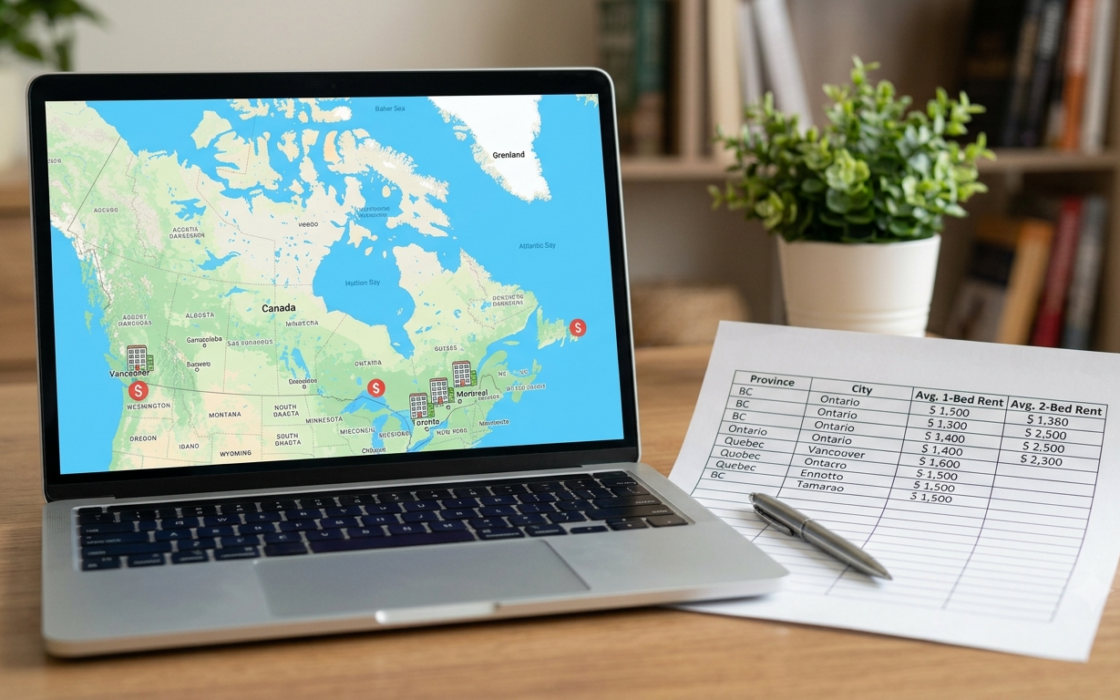
To compare apartment rental prices in Canada across different provinces online, use national data aggregators like Rentals.ca and Zumper alongside official reports from the Canada Mortgage and Housing Corporation (CMHC). Combining real-time listing benchmarks with government reports allows renters and newcomers to evaluate baseline asking rents, track month-over-month trends, and accurately calculate regional cost-of-living differences.
Table of Contents
Understanding Canadian Rental Data Tools and Platforms
Navigating the Canadian real estate market requires relying on trustworthy online tools that collect and process real-time rental listings. Finding accurate pricing across provinces involves comparing two distinct data types: live market listings and historical benchmark reports.
According to the Canada Mortgage and Housing Corporation (CMHC), primary rental market reports provide long-term stability metrics, whereas private listing platforms reflect immediate asking prices for vacant units. To get a complete overview of the current landscape, renters should reference both official government housing data and private rental market portals.
Online aggregators compile listings from municipal hubs like Toronto, Vancouver, Montreal, and Calgary, standardizing pricing by bedroom count and property type. Using these tools correctly ensures you do not overpay or rely on outdated rental averages when planning a move between provinces.
Step-by-Step Process to Compare Apartment Rental Prices in Canada
To establish an accurate cross-provincial pricing model, follow a structured research workflow. Comparing provincial markets requires isolating variables such as unit size, included utilities, and lease structures.
- Establish a Baseline Unit Size: Filter online searches strictly by bedroom count (e.g., 1-bedroom vs. 2-bedroom) to avoid skewed average pricing across different cities.
- Consult National Monthly Rent Reports: Review monthly industry reports from portals like Rentals.ca or Zumper to examine macro-level asking rent trends across major provinces like Ontario, British Columbia, Quebec, and Alberta.
- Cross-Reference Official CMHC Data: Access the CMHC Housing Market Information Portal to examine historical rent figures, vacancy rates, and purpose-built rental trends.
- Account for Included Utilities: Factor in heating, water, and electricity costs, as lease norms vary by province (e.g., Quebec leases frequently exclude heating, whereas some Ontario apartments bundle utility costs).
- Adjust for Local Tenant Rights: Check provincial tenancy regulations, as rent control frameworks impact long-term pricing predictability differently in Ontario, Quebec, and British Columbia.
Provincial Rental Price Comparison Framework
Understanding how rental prices differ across Canadian regions requires a side-by-side evaluation of average costs, market liquidity, and tenant protection structures.
| Province | Average 1-Bed Rent (CAD) | Average 2-Bed Rent (CAD) | Primary Market Characteristic | Rent Control Framework |
| British Columbia | $2,300 – $2,700 | $3,100 – $3,600 | High demand, low vacancy | Annual cap set by province |
| Ontario | $2,100 – $2,500 | $2,600 – $3,100 | Competitive urban centers | Applies to units occupied before Nov 15, 2018 |
| Alberta | $1,500 – $1,800 | $1,800 – $2,200 | Rapidly growing, market-driven | No annual rent increase cap |
| Quebec | $1,400 – $1,700 | $1,700 – $2,100 | Affordable baseline, high inventory | Tribunal administratif du logement guidelines |
Note: Data benchmarks reflect aggregate market reports from national listing portals and CMHC annual summaries.
This comparison highlights that while Western Canada and Ontario present higher baseline asking rents, provinces like Quebec and Alberta offer relatively lower entry points for multi-bedroom units.
Key Factors That Cause Rental Price Variations Across Provinces
Municipal zoning policies, demographic migration patterns, and local economic conditions create significant rent disparities between Canadian provinces. Urban centers with high population inflows, such as the Greater Toronto Area and Metro Vancouver, consistently record the highest asking rents in the country.
In contrast, Prairie provinces like Saskatchewan and Manitoba maintain lower average rents due to available land supply and different population growth trajectories. According to Statistics Canada, interprovincial migration to provinces like Alberta directly correlates with short-term surges in local rental demand and reduced vacancy rates.
Furthermore, property tax rates, building maintenance costs, and heating requirements influence how landlords price their rental units across northern and southern regions.
Expert Tips for Finding Accurate Rental Values and Local Insights
When researching rental properties across different Canadian provinces, digital tools and online listings are essential, but combining them with local industry expertise yields the best results. In practice, what I see working for our clients is combining national price index data with direct local market guidance.
As part of Daitana’s team at Comfort Living, I always recommend taking advantage of curated local resources to navigate your relocation smoothly. A valuable step in your research process is to visit the Comfort Living Website, where our team shares detailed housing insights, neighborhood guides, and practical relocation strategies tailored to living in Canada.
To complement your online research with visual tours and insider perspectives on Canadian living, you should also check out Daitana’s YouTube Channel. Daitana, our director at Comfort Living, regularly posts video content explaining community setups, lifestyle expectations, and practical housing advice to help you evaluate your options effectively before making a commitment.
FAQ about compare apartment rental prices in Canada
How do I check average rental prices in Canadian cities?
To check average rental prices in Canadian cities, review the monthly national rent reports published by platforms like Rentals.ca or consult the Canada Mortgage and Housing Corporation (CMHC) portal. These resources publish localized data breaking down average rents by city, province, and unit type.
Which Canadian province has the cheapest rent?
Saskatchewan and Manitoba currently offer some of the most affordable rental prices among Canadian provinces. Average one-bedroom apartment rents in major cities like Regina, Saskatoon, and Winnipeg remain significantly below the national average compared to metropolitan areas in Ontario and British Columbia.
Do rental prices in Canada include utilities?
Whether rental prices in Canada include utilities depends on individual lease agreements and regional practices. In Ontario and Quebec, some older buildings bundle heat and water into the monthly rent, while electricity and internet are usually billed separately to the tenant regardless of the province.
How often do rental prices change in Canada?
Asking rental prices for vacant units fluctuate daily based on real-time market supply and seasonal demand trends. However, for existing tenants, provincial regulations govern rent increases, typically limiting adjustments to once every 12 months up to a provincially approved percentage cap in regulated areas.
Are online rental listings accurate across provinces?
Online rental listings on reputable platforms are generally accurate for current asking prices, but renters should watch out for hidden fees or excluded utilities. Always verify listings against local market averages and schedule virtual or in-person viewings before signing a lease or submitting deposit funds.
Learning how to compare apartment rental prices in Canada online equips renters with the financial clarity needed to plan a seamless provincial relocation. By leveraging a combination of CMHC housing data, real-time market reports, and trusted local resources, you can confidently navigate regional price variations and secure a lease that fits your lifestyle and budget. Start your housing search today by exploring local neighborhood guides and building a personalized moving plan.
You Might Also Like
If you are planning your rental search in Canada, here are three essential guides to help you secure your next home safely and efficiently:
Furnished vs. Unfurnished Apartments in Canada: Which Is Better? – Compare the hidden costs, lease flexibility, and overall value between furnished and unfurnished units to decide which option fits your budget.
5 Reliable Websites to Rent Apartments in Canada Online – Discover the top verified digital platforms and listing aggregators to find legitimate apartment rentals across Canadian provinces.
How to Avoid Rental Scams in Canada: Warning Signs – Protect yourself from common online rental fraud, fake landlord profiles, and illegal deposit requests with this comprehensive safety checklist.
External links
Canada Mortgage and Housing Corporation (CMHC) Housing Market Information Portal